Sunday, 8 September 2013

Historic Copy


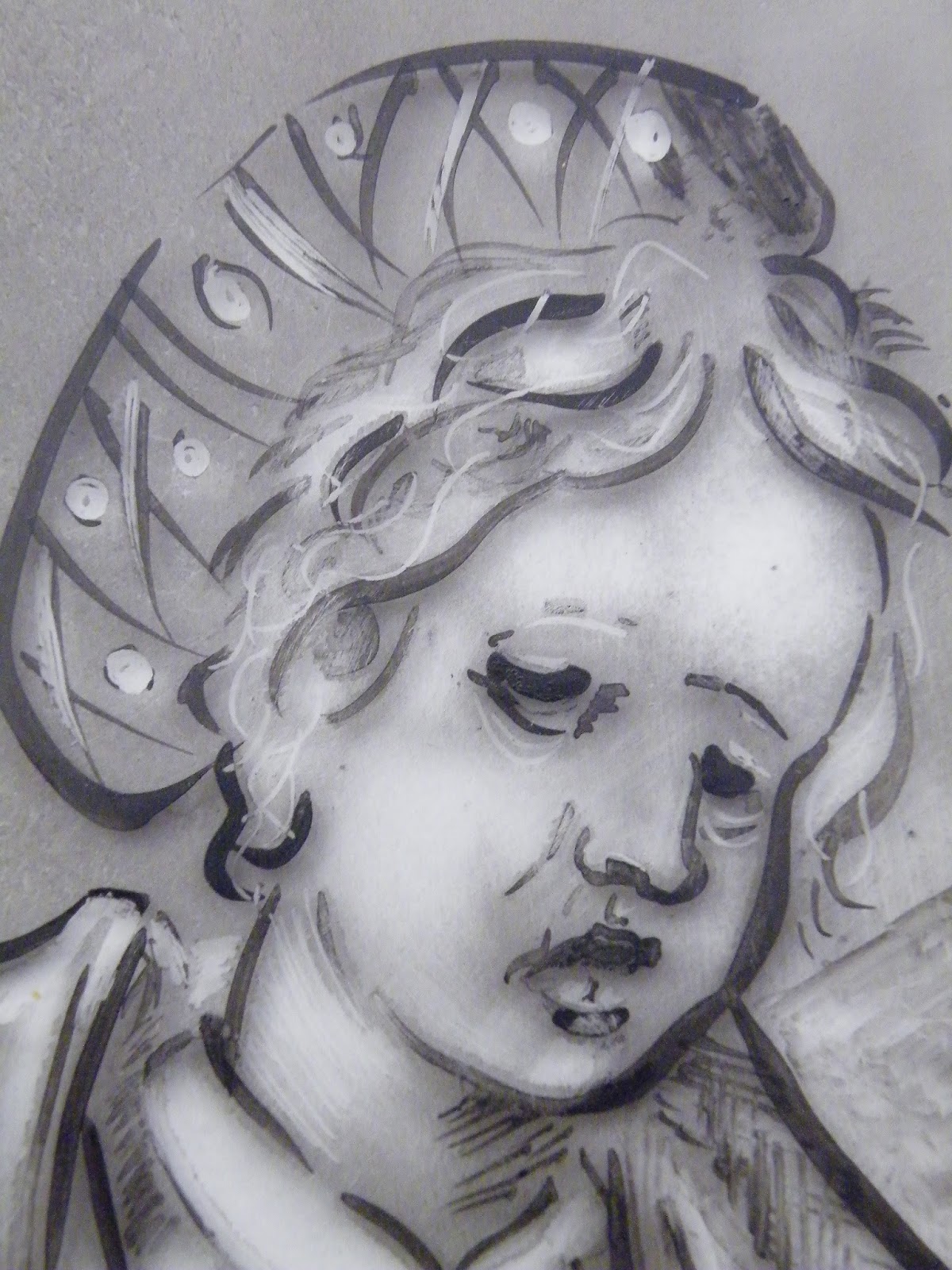
Painting this figure was a concern to begin with, looking at all the detail that needed to be in him was going to be a huge challenge for me. I could see a lot of hair, and hair is always so descriptive. I also needed to make sure that the light was balanced and was giving the face the right amount character. Once I had stopped panicking, I was able to treat this no differently than the other figures, to begin with a loose study and simply play with the weight of line and light.

 
These figures are grouped together and again made me nervous. I simply had fun with each face and tried to apply as much expression and life into each one. The line work is very free on this sample, this is simply to help me to relate weight of line, light and dark and keep me relaxed before I start to make more detailed samples.

 
This figure study was a true delight, she was so graphic looking, she had bold line work and great features. I could really play with my application of line on her dress, hand and face.

Historic Copy


Here you can see that the brush strokes are loose and varying in thickness, this is simply due to the way approach glass painting in the first stages. Allowing myself to act freely gives me a confidence to feel more comfortable with the brushes and tools. I can then do more controlled studies and really concentrate on the fine details.

Historic Copy


A close look at some studies I did for a V&A historic copy. I picked a Flemish Roundel from the 15th century and recreated it. Here is a close look at the initial painting tests. Brush stroke, highlighting and stick work are really important in glass painting, as you want to be able to control the light. These tests allowed me to not only see the marks that were made on the original figure, but how heavy to apply the paint and how much to take away.


Thursday, 5 September 2013